The Fear, Pain, Tension Cycle
Click HERE to download for printing!
The fear-tension-pain cycle is a well-known phenomenon that can occur during childbirth, causing increased pain and discomfort during labor. The cycle was first described by Dr. Grantly Dick-Read, a British obstetrician, in the 1930s. Dr. Dick-Read noticed that people who were fearful and anxious during labor tended to have longer and more painful labors. He theorized that fear and anxiety caused tension in the body, which in turn led to more pain and discomfort. Dr. Dick-Read believed that by reducing fear and anxiety, laboring people could have a more positive and less painful labor experience. Here's how the cycle works:
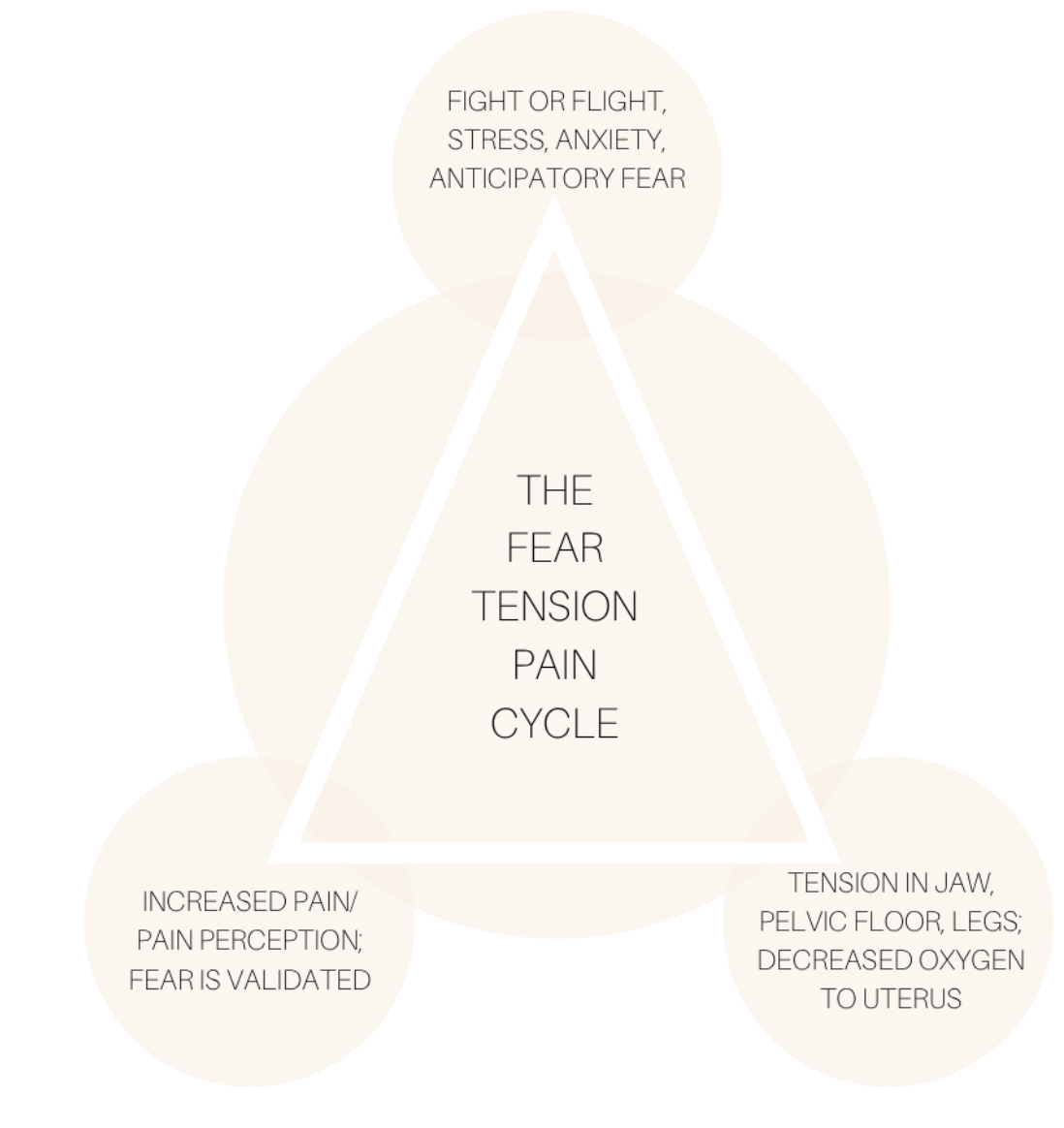
When you’re feeling fearful, anxious, or unsafe, your body's fight or flight mode activates and your bloodstream fills with adrenalin. Your body reroutes blood and oxygen away from vital organs, and sends it towards the extremities to help you escape your threat (flight mode). You may start breathing heavily, sweating, and your heart rate will increase. It’s an automatic and primitive response to fear, and it’s not always something you can control.
The fight part of this response causes you to tense up your entire body in anticipation of pain or threat. Your muscles get tense, your shoulders rise, your fists and jaw clench, and all of the muscles in your body are stiff and activated. You're ready to fight your threat (in this scenario, your "threat" is the pain of labor). When your body is in this state, it's really hard to calm down or feel relaxed, and you'll usually experience even more pain. . Additionally, when the body is tense, it can interfere with the natural progression of labor, making it more difficult for the baby to move down the birth canal.
So what happens when this occurs during labor? Imagine this: you just finished a surge, and it was really hard. You’re starting to really work hard through your surges, and you’re beginning to feel nervous about how intense things are getting. Maybe your partner doesn’t pick up on this, and you’re starting to feel panicked because your coping tools suddenly aren’t working anymore. You’re dreading the next surge. You’re 5 centimeters dilated and making good progress, but you know you still have time to go and you’re tired. The first voice of doubt creeps into the back of your mind. “What if I really can’t do this? What if this goes on for hours?” Your heart rate increases, your breathing quickens, and your body starts to tense up- all without you noticing. All of a sudden, the next surge begins. “Wow!” you think. “This is even harder than the last one. I can’t do this! The next one will be even worse, and I still have so long to go…”
This is a classic example of the fear-tension-pain cycle. When you get stuck using (or trying to use) your rational, logical, “thinking” brain, you’re much less able to tap into your body’s instinctual knowledge and your body’s hormones (and the natural pain relief that oxytocin and endorphins provide). Instead of surrendering to the process and staying calm, the fear-tension-pain cycle (and the fight-or-flight response) tells you you’re in an emergency and that you need to mobilize to stay safe. It causes you to fight each surge and your progressing labor, potentially causing you to feel overwhelmed, panicked, or afraid.
Breaking the fear-tension-pain cycle can be challenging, but there are various techniques available that can help. Here are some tips to avoid this cycle during your labor:
Knowing Hormones role:
Helpful hormones:
Oxytocin – helps labor start and keep going.
Endorphins – help you stay calm and handle pain.
Relaxin – loosens your body for birth.
Prostaglandins – soften the cervix so baby can come out.
Melatonin – works with oxytocin, helps labor happen better at night or in calm, dark spaces.
Unhelpful hormones:
Cortisol – stress hormone, can slow or stall labor.
Adrenaline – fight or flight hormone, can stop labor if you're scared or tense. Can be helpful in intense stages
Oxytocin + Endorphins = perfect mix!
Oxytocin gets labor going, and endorphins keep you calm and help with the pain. They work like sugar and flour—better together!
Oxytocin + Cortisol = not a good combo.
Cortisol is the stress hormone. When it's high, it blocks oxytocin, like putting salt instead of sugar in your cake—not so good!
Support
Team Support:
Your birth team is whoever you invite into your birthing space. Having your team be confident on what you want is important and special. Everyone in your birth team (Husband, me, midwife, doctor, nurse) should know and honor your birth preferences. The great thing about having a doula is someone to advocate for you!
Physical Support:
Before labor it is encourged to practice laboring positions and comfort measures with doula and partner. That way you feel best prepared for the real deal and the team can learn what you tend to like and what you don’t. Talk about what you want physically in your birth space. Essential oils? Birth ball? Rebozo? Twinkle lights? Candles? Music? Nothing is too weird, just ask!
Doula Support:
Working with me as your doula is such a joy. My goal for every friend that hires me is that we work together as a team in preparation for labor. I know the signs of fear tension pain cycle and am passionate in guiding you through every feeling.
Mindset:
Visualization:
Visualization is a powerful tool. Athletes use visualization constantly to help them focus in on the game and get that win labor is a sport! Before labor you can visualize your baby in your arms, a wave coming in and out, or a flower blooming. Each wave or bloom bringing you to your baby.
Positive Affrimation/ Prayer:
Create a list of affirmations or prayers that conncet to you. Practice these outloud in the shower, or in the car, or with your partner. “My body grew this baby, I can birth this baby”, or a breath prayer like, breathe in (“the lord is my shepard”) breathe out (“I shall not want”)
Reframe the Pain:
Rather than running away from the pain, run towards it in expectancy and surrender. You know you are going to experience a surge, it is not a suprise, use tools like comfort mesaures, breathing, birth comb, etc. Not running from it, but rather meeting it head on.
